好
- Ideogrammatic compound 會意
- HSK 4
- TOCFL 1
- radical 女
- 6 strokes
Etymology graph
- inherited
- borrowed
- derived
- parts
- meaning component
- sound component
- related
點擊節點放大 · Click a node to zoom in
Origin
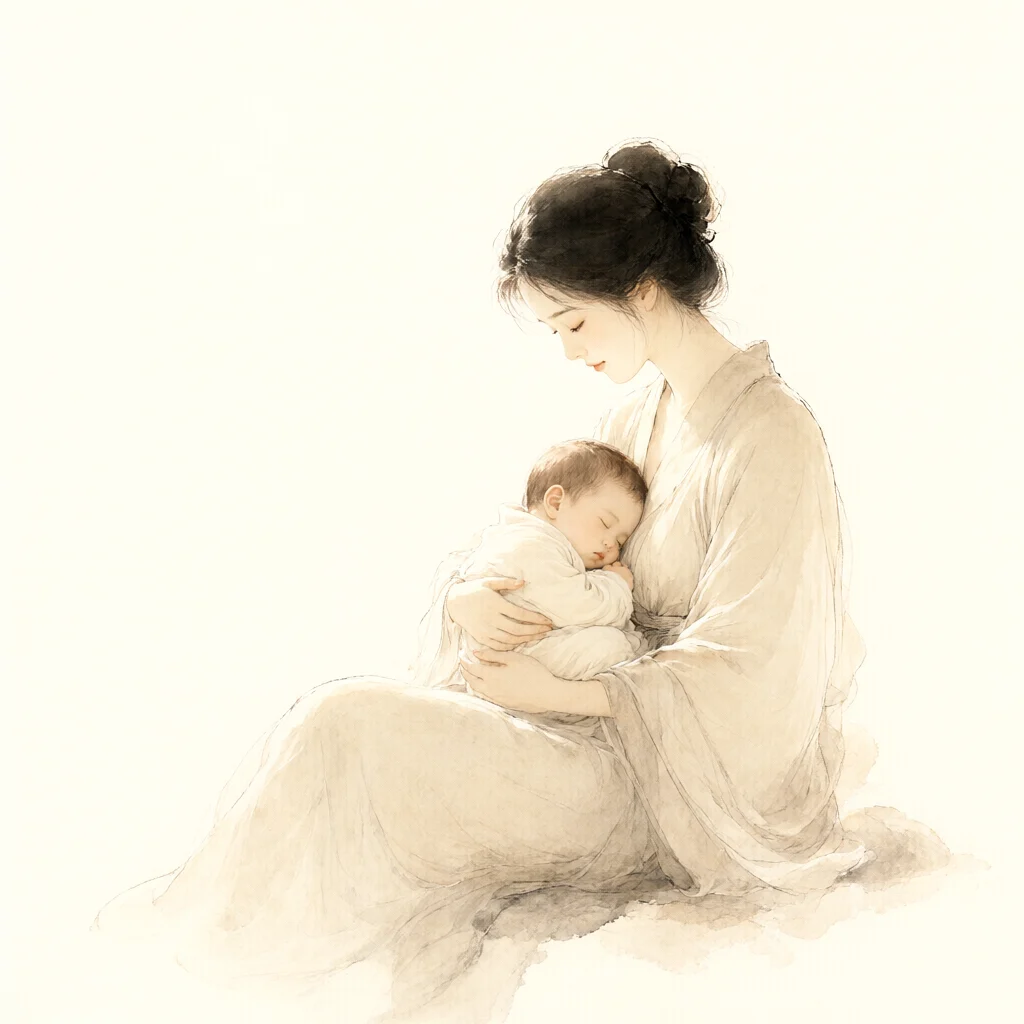
The character is an ideogrammic compound formed from 女 (woman) and 子 (child). The widely accepted meaning is that the two characters were combined because it was good for a woman to have a child, or to represent the mutual affection between a mother and child, which then extended to mean "good." Other theories suggest 子 could mean "son," implying the good fortune of having both a boy and a girl, or "man," referring to the love between a man and a woman. Duan Yucai’s annotation of the Shuowen interpreted the character as originally referring to the beauty of a woman.
Regarding its linguistic roots, the character has been compared with Proto-Sino-Tibetan *hu ("to raise; to rear; to nourish"), which is cognate with Proto-Lolo-Burmese *hu³, Abor-Miri u, and Northern Qiang χu. If this connection is correct, it may be related to 畜. It is also possibly related to Tibetan མཁོ (necessary, important). Additionally, Central Bai hux ("good") may be a loanword from Chinese.
Two pronunciations of the word are cognate; the second is a *-s suffixed form of the first, meaning "to consider good."
Confidence: high · written by gemma4:26b, checked statement-by-statement against the sources below.
「好」是一個會意字,由「女」與「子」組成。在《說文解字》中解釋為「美也」,其結構從女、子。關於其字源有幾種解釋:一種廣泛接受的說法認為,將「女」與「子」結合,是因為女性生育孩子是好事;另一種說法則認為這代表母子之間的相互愛憐,進而引申為「好」。也有理論認為「子」可解釋為「兒子」,意指兒女雙全的福氣;或將「子」解釋為「男子」,指男女之間的愛;此外,段玉裁在《說文解字》的注釋中認為此字原指女性的美麗,也有說法認為是指女孩的「態度」很好。
在語言學層面上,此字有兩種讀音,兩者為同源詞,第二種讀音被視為第一種讀音的 *-s 接尾形式,意為「認為是好的」。在原始漢藏語層面,此字可能與原始漢藏語 *hu(意為「撫養;養育;滋養」)有關,並與「畜」具有可能的關聯;此外,它也可能與藏語 མཁོ(意為「必要的;重要的」)有關。此外,中央白語的 hux(意為「好的」)可能也是從中文借用的詞彙。
Confidence: high · written by gemma4:26b, checked statement-by-statement against the sources below.
Lineage
Wiktionary etymology text
Ideogrammic compound (會意 /会意): 女 (“woman”) + 子 (“child”).
The widely accepted meaning of this character is that the characters for “female” (女) and “child” (子) were put together to form a compound because it was good for a woman to have a child. Similarly, it has been proposed that the compound originally refers to the mutual affection between the mother and child, which then extended to mean “good”. These theories are supported by the smaller 子 found in some oracle bones and bronze inscriptions. See also 保 and the original version of 乳.
However, broader interpretations of the second character 子 could lead to other theories. 子 could also mean “son”, so it may have meant two children, a boy and a girl next to each other, which is a good fortune to have a boy and a girl. 子 could also mean “man”, so it may have referred to the love between a man and a woman, which is good. Duan Yucai, in his annotated version of Shuowen, interpreted it as originally referring to the beauty of woman. Lastly, it could mean that the “attitude” of a girl was considered good.
The two pronunciations are cognate – pronunciation 2 is the *-s suffixed form, or exoactive/putative of pronunciation 1, literally “to consider good”. Compare 惡 (OC *qaːɡ, “bad; evil”) > 惡 (OC *qaːɡs, “to consider bad; to hate”).
This word has been compared with Proto-Sino-Tibetan *hu (“to raise; to rear; to nourish”): Proto-Lolo-Burmese *hu³, Abor-Miri (Tani) u, Mawo Northern Qiang χu, which is only attested in a limited number of languages. If this is correct, it may be related to 畜 (OC *l̥ʰuɡs, *l̥ʰuɡ, *hluɡ, “to raise; to rear; domesticated animal”). Alternatively, compare Tibetan མཁོ (mkho, “necessary, important”).
Cognate with Central Bai hux (“good”), which may be a loanword from Chinese.
From Wiktionary, CC BY-SA 4.0.
How 好 was written 字形演變
 Oracle bone甲骨文Shang, c. 1250–1050 BCE
 Bronze金文Shang–Zhou
 Chu slips & silk楚系簡帛Warring States
 Qin slips秦系簡牘Qin
 Small seal說文小篆Shuowen, c. 100 CE
 Regular楷書since c. 200 CE
Historical forms collected by the legacy etymfun dataset; most characters have several attested variants.
Sources
- etymagent (local gemma4:26b) — Generated
- Historical glyph forms (zdic.net 字形演变) — Rights unverified
- HSK / TOCFL word lists — Facts (levels)
- 教育部《國語辭典簡編本》 (Taiwan MOE) — CC BY-ND 3.0 TW
- 說文解字 Shuowen Jiezi (Xu Shen, c. 100 CE) — Public domain
- Written form — n/a
- Wiktionary (via Wiktextract / kaikki.org) — CC BY-SA 4.0
- Wiktionary: 好