源etymfun
About

Etymology data from Wiktionary via Wiktextract (CC BY-SA 4.0). Chinese character data from the 說文解字, the Taiwan MOE 國語辭典簡編本 (CC BY-ND 3.0 TW) and HSK/TOCFL lists.

Explanations are written by a local model (gemma4) and only published after a verification pass against the cited sources. How it works.

Chinese

如火如荼

/ɻu³⁵ xu̯ɔ²¹⁴⁻²¹ ɻu³⁵ tʰu³⁵/
a mighty army like wildfire
    Post Share

    Etymology graph

    • inherited
    • borrowed
    • derived
    • parts
    • meaning component
    • sound component
    • related
    React Flow
    Press enter or space to select a node. You can then use the arrow keys to move the node around. Press delete to remove it and escape to cancel.
    Press enter or space to select an edge. You can then press delete to remove it or escape to cancel.

    點擊節點放大 · Click a node to zoom in

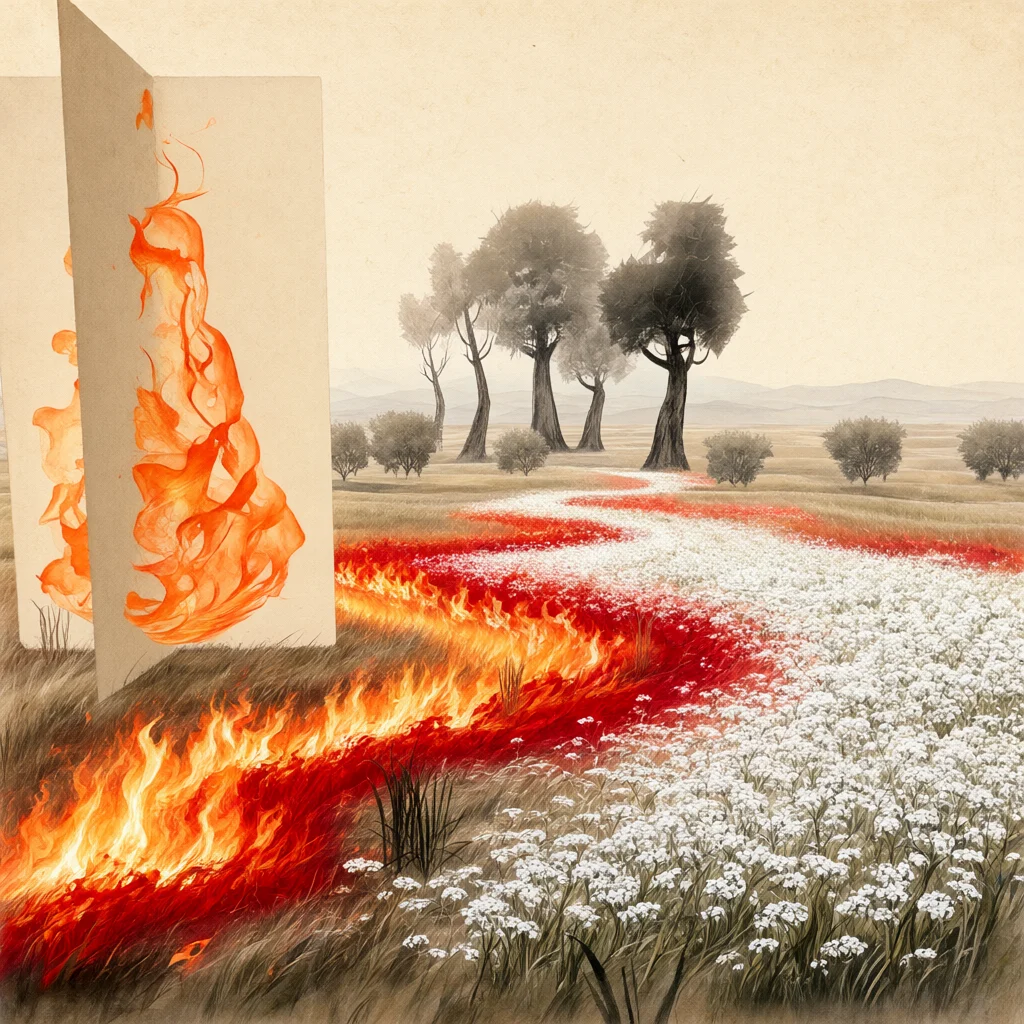
    The phrase compares a vigorous momentum to the striking visual contrast of spreading red fire and white flowering weeds.
    The phrase compares a vigorous momentum to the striking visual contrast of spreading red fire and white flowering weeds.

    Origin

    The phrase is formed from the characters 如, 火, and 荼. The character 如, meaning "to be like; as; as if; as though," contains the semantic component 口 (mouth) and the phonetic component 女 (woman). The character 火 means "fire; flame." The character 荼 is a synonym of 苦蕒 or 苦荬; it contains the semantic component 艸 (grass) and the phonetic component 余 (I; me).

    According to the Guoyu, the phrase describes how spectacular the Wu army was. The character 荼 refers to the white flowers of certain grasses. The expression compares something to being as red as fire and as white as the flowers of 荼. While originally used to metaphorically describe a grand military formation, it is now often used to describe the intense prosperity or the bustling and magnificent state of things.

    Confidence: high · written by gemma4:26b, checked statement-by-statement against the sources below.

    此成語由「如」、「火」、「荼」三個字組成。「如」意為「像」、「如同」;「火」指火焰;「荼」則是茅草的白花,與「苦蕒」或「苦荬」同義。從字形結構來看,「如」字由表示意義的「口」與表示聲音的「女」組成;「荼」字則由表示意義的「艸」與表示聲音的「余」組成。

    在原意上,這個詞比喻事物像火一樣紅,像荼花一樣白。最初是用來形容軍容壯盛,後來多用於形容事物發展得非常熾烈興盛,或是景象十分繁盛熱鬧。

    Confidence: high · written by gemma4:26b, checked statement-by-statement against the sources below.

    Lineage

    • characterChinese如 “to be like; as; as if; as though”
      • soundChinese女 “woman; (only of humans in Standard Chinese) female”
      • meaningChinese口 “mouth, especially the lips and internal mouth cavity (Classifier: 把 c)”
    • characterChinese火 “fire; flame (Classifier: 把 m; 團/团 m)”
    • characterChinese荼 “synonym of 苦蕒 /苦荬 (kǔmǎi)”
      • meaningChinese艸 “grass”
      • soundChinese余 “I; me”
    Wiktionary etymology text

    From a statement in Guoyu describing how spectacular the Wu army was

    From Wiktionary, CC BY-SA 4.0.

    Meanings

    phrase
    1. a mighty army like wildfire
    2. a daunting and vigorous momentum; flourishing; magnificent

    國語辭典 definitions

    1. 荼,茅草的白花。如火如荼指像火那樣紅、荼那樣白。原比喻軍容壯盛,後多用來比喻事物的熾烈興盛或景況的繁盛熱鬧。語本《國語.吳語》。 例:本年度大學校際籃球比賽正進行得如火如荼,競爭相當激烈。

    © Ministry of Education, Taiwan — CC BY-ND 3.0 TW, shown unaltered.

    Sources

    • etymagent (local gemma4:26b) — Generated
    • 教育部《國語辭典簡編本》 (Taiwan MOE) — CC BY-ND 3.0 TW
    • Written form — n/a
    • Wiktionary (via Wiktextract / kaikki.org) — CC BY-SA 4.0
    • Wiktionary: 如火如荼