捲土重來
- 卷土重來
- 卷土重来
Etymology graph
- inherited
- borrowed
- derived
- parts
- meaning component
- sound component
- related
點擊節點放大 · Click a node to zoom in
Origin
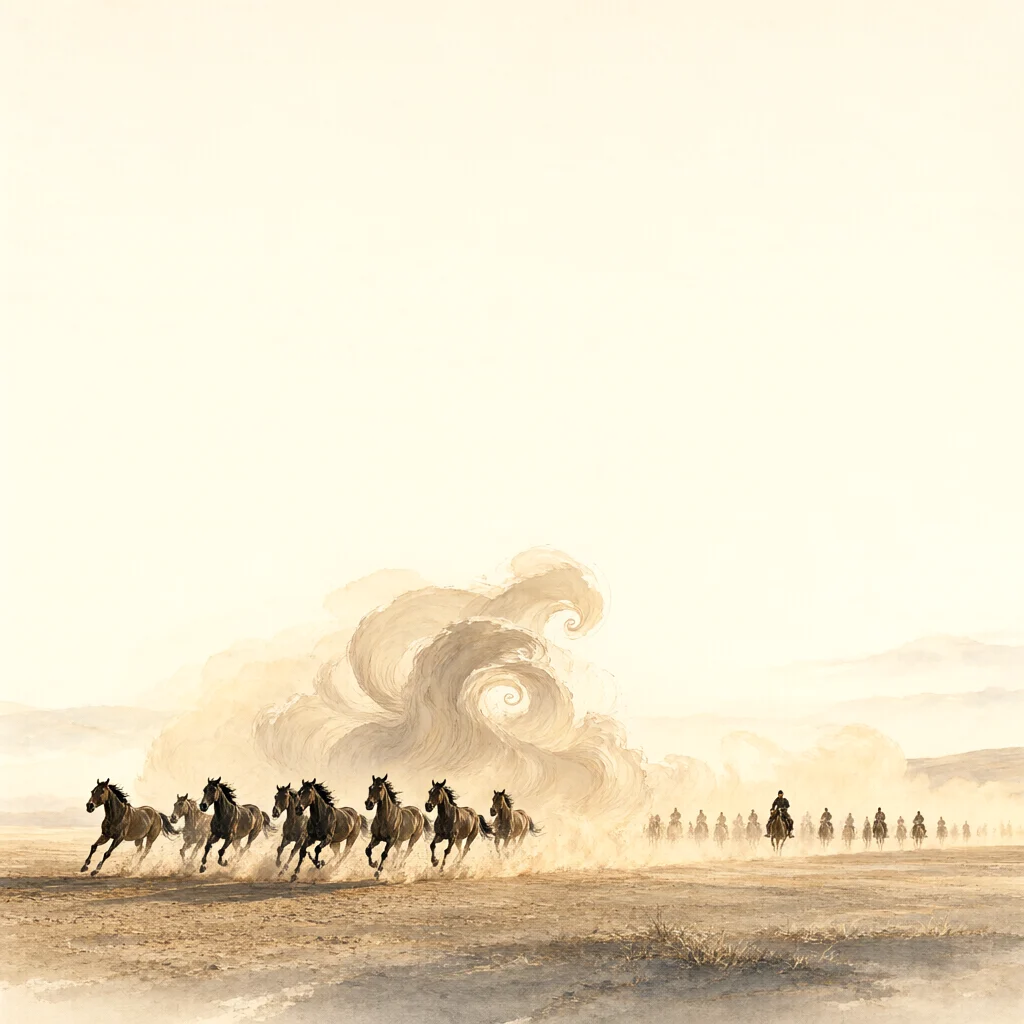
The phrase 捲土重來 was first attested in 841 in Du Mu's poem *On the Pavilion by the Wu River*. It is composed of four characters: 捲, meaning to roll, roll up, or curl; 土, meaning earth or soil; 重, meaning heavy; and 來, meaning to come or arrive.
In the context of the phrase, 捲土 describes the dust raised when people and horses run, while 重來 refers to rushing or pouncing forward again. It serves as a metaphor for regaining strength to attempt something again after a failure, or for restoring a previous state of affairs or influence.
Confidence: high · written by gemma4:26b, checked statement-by-statement against the sources below.
Lineage
Wiktionary etymology text
First attested in 841 in Du Mu's famous poem On the Pavilion by the Wu River
From Wiktionary, CC BY-SA 4.0.
Sources
- etymagent (local gemma4:26b) — Generated
- 教育部《國語辭典簡編本》 (Taiwan MOE) — CC BY-ND 3.0 TW
- Written form — n/a
- Wiktionary (via Wiktextract / kaikki.org) — CC BY-SA 4.0
- Wiktionary: 捲土重來