源etymfun
About

Etymology data from Wiktionary via Wiktextract (CC BY-SA 4.0). Chinese character data from the 說文解字, the Taiwan MOE 國語辭典簡編本 (CC BY-ND 3.0 TW) and HSK/TOCFL lists.

Explanations are written by a local model (gemma4) and only published after a verification pass against the cited sources. How it works.

Chinese

提心吊膽

/tʰi³⁵ ɕin⁵⁵ ti̯ɑʊ̯⁵¹ tän²¹⁴⁻²¹⁽⁴⁾/
to be on tenterhooks; to be scared or jittery; to be in constant fear
  • 提心弔膽
  • 提心吊胆
Post Share

Etymology graph

  • inherited
  • borrowed
  • derived
  • parts
  • meaning component
  • sound component
  • related
React Flow
Press enter or space to select a node. You can then use the arrow keys to move the node around. Press delete to remove it and escape to cancel.
Press enter or space to select an edge. You can then press delete to remove it or escape to cancel.

點擊節點放大 · Click a node to zoom in

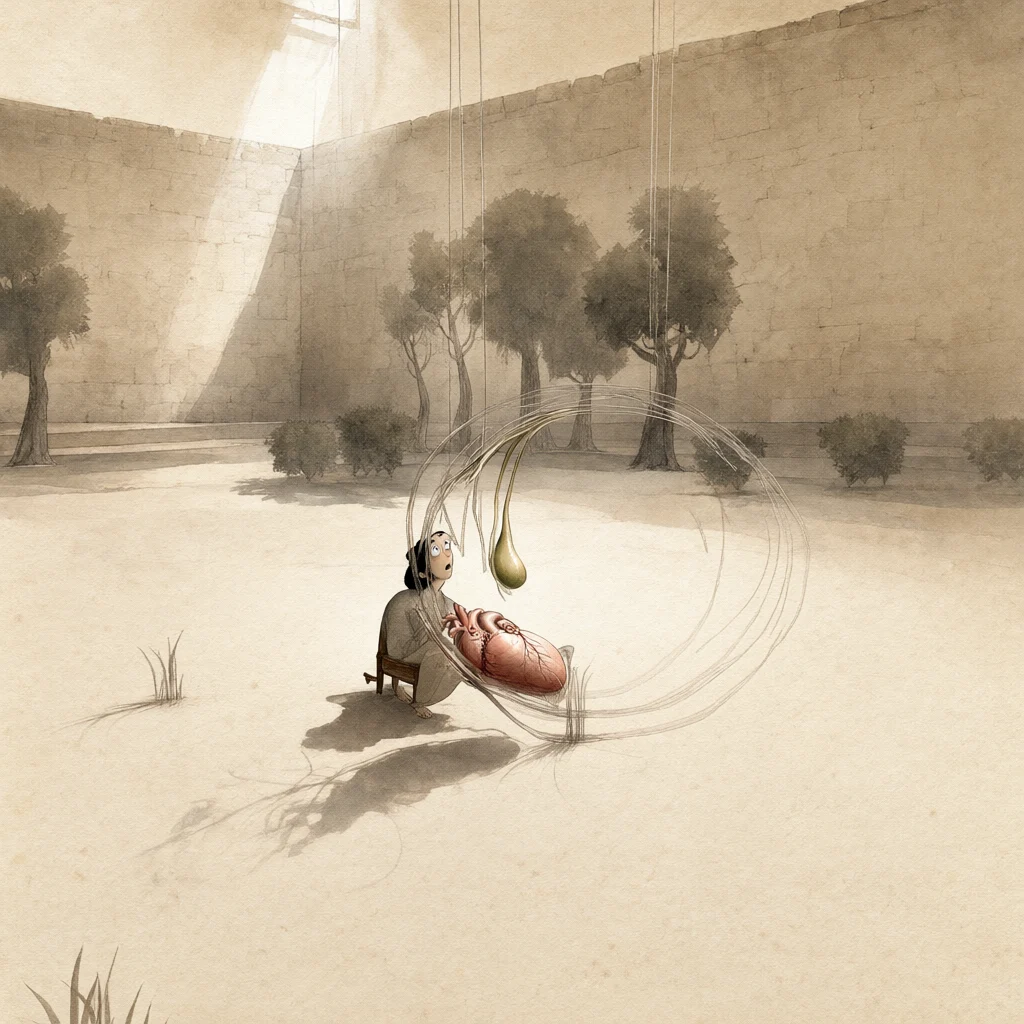
The phrase literally describes a heart being lifted and a gallbladder being suspended, capturing a state of extreme anxiety.

Origin

The phrase 提心吊膽 is formed by four characters. 提 means to carry or to lift; it contains the semantic component 手 (hand) and the phonetic component 是 (this). 心 means heart. 吊 means to condole, to mourn, or to pity. 膽 means gallbladder; it is composed of the semantic component 肉 (meat or flesh) and the phonetic component 詹 (verbose or garrulous).

The phonetic component 詹 is further composed of 言 (to say or speak), 八 (eight), and 厃 (to look upward). The character 厃 is itself composed of 人 (man or person) and 厂 (cliff or habitable cave on a cliff).

Confidence: high · written by gemma4:26b, checked statement-by-statement against the sources below.

其中「提」字包含表示「手」的意符,以及表示音符的「是」;「心」指心臟;「吊」有哀悼、憐恤之意;「膽」字則由表示「肉」的意符與表示音符的「詹」組成。

在構成音符「詹」的結構中,包含了「言」、「八」以及「厃」三個部分。而「厃」字是由「人」與「厂」所組成,意指向上看。此成語透過這些字元的組合,用以描述一種處於高度緊張、如坐針氈的心理狀態。

Confidence: high · written by gemma4:26b, checked statement-by-statement against the sources below.

Lineage

  • characterChinese提 “to carry; to lift”
    • meaningChinese手 “hand (Classifier: 隻/只 m c mn; 雙/双 m mn; 對/对 c)”
    • soundChinese是 “this; this thing”
  • characterChinese心 “heart (Classifier: 顆/颗 m; 個/个 c; 粒 mn)”
  • characterChinese吊 “to condole; to mourn; to pity”
  • characterChinese膽 “gallbladder”
    • meaningChinese肉 “meat; flesh”
    • soundChinese詹 “verbose; garrulous”
      • ideaChinese言 “to say; to speak; to talk”
      • ideaChinese八 “eight”
      • ideaChinese厃 “to look upward”
        • ideaChinese人 “man; person; people (Classifier: 個/个 m c; 隻/只 h)”
        • ideaChinese厂 “cliff; habitable cave on a cliff”
Wiktionary etymology text

No etymology text yet. The graph shows what is known from the sources.

Meanings

phrase
  1. to be on tenterhooks; to be scared or jittery; to be in constant fear

國語辭典 definitions

  1. 形容心理上、精神上擔憂恐懼,無法平靜下來。 例:山坡地未做好水土保持,每到雨季,土石滑落的情形總令山下住戶提心吊膽。

© Ministry of Education, Taiwan — CC BY-ND 3.0 TW, shown unaltered.

Sources

  • etymagent (local gemma4:26b) — Generated
  • 教育部《國語辭典簡編本》 (Taiwan MOE) — CC BY-ND 3.0 TW
  • Written form — n/a
  • Wiktionary (via Wiktextract / kaikki.org) — CC BY-SA 4.0