搖身一變
- 摇身一变
Etymology graph
- inherited
- borrowed
- derived
- parts
- meaning component
- sound component
- related
點擊節點放大 · Click a node to zoom in
Origin
The phrase is formed by combining the characters 搖 (to wag, swing, or wave), 身 (body), 一 (one), and 變 (to change by itself or transform).
The character 變 contains the semantic component 攴 (to hit lightly or tap) and the phonetic component 䜌 (chaotic). The component 䜌 is further composed of 絲 (silk, fibre, cloth, or fabrics, etc.) and 言 (to say, speak, or talk). Within 絲, the component 糸 (thin silk) is present.
Confidence: high · written by gemma4:26b, checked statement-by-statement against the sources below.
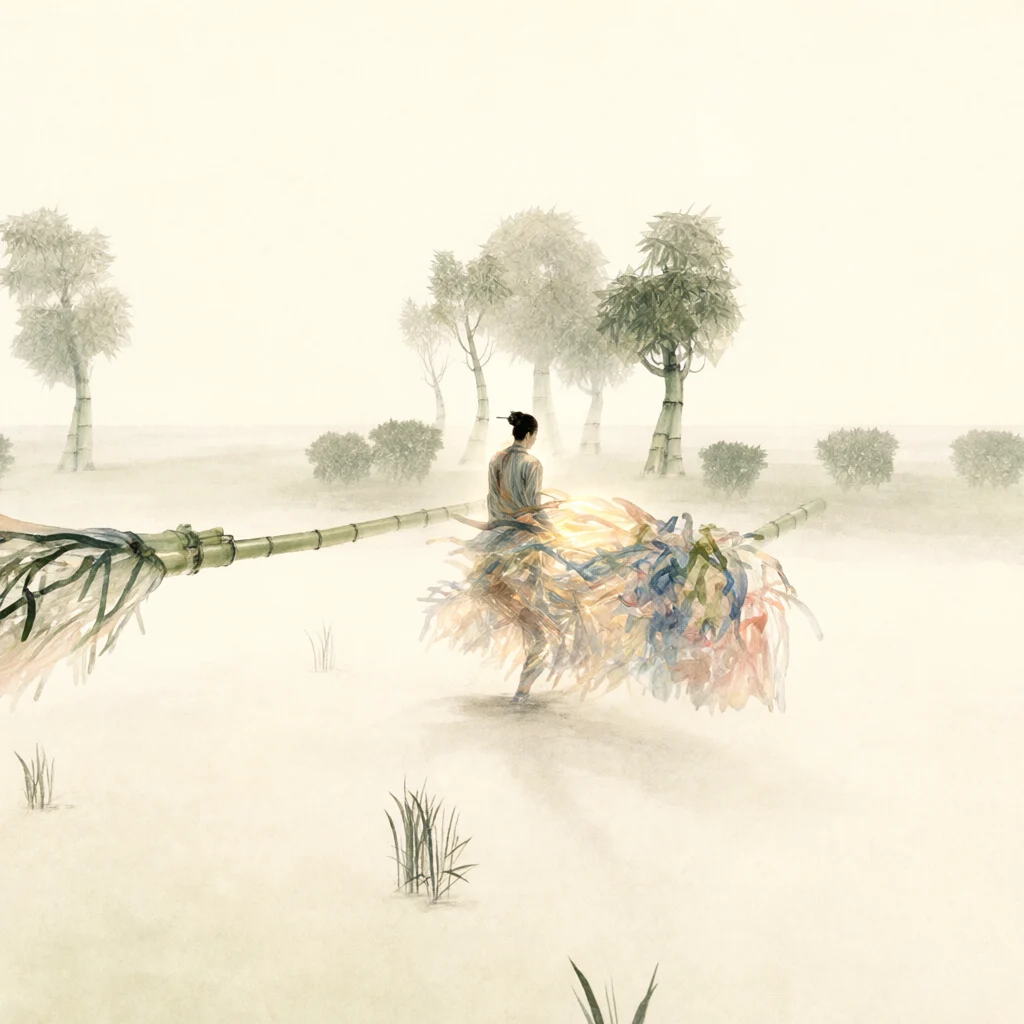
「搖身一變」由四個漢字組成:「搖」意為搖動、擺動或揮動;「身」指身體;「一」為數字一;「變」則表示改變或轉化。其中,「變」字包含語義成分「攴」(意為輕輕打擊或敲擊),以及音符成分「䜌」。
在字形結構上,「䜌」字由「絲」(意為絲綢、纖維或布料)與「言」(意為說話或談論)組成,而「絲」字又包含了「糸」(意為細絲)的成分。這個詞彙透過組合這些字形,用來形容一個人或神怪在瞬間完成身分的轉換或外表的改變。
Confidence: high · written by gemma4:26b, checked statement-by-statement against the sources below.
Lineage
- characterChinese搖 “to wag; to swing; to wave”
- characterChinese身 “body”
- characterChinese一 “one”
- characterChinese變 “to change (by itself); to transform”
- soundChinese䜌 “chaotic”
- ideaChinese絲 “silk (fibre, cloth, fabrics, etc.)”
- ideaChinese糸 “thin silk”
- ideaChinese言 “to say; to speak; to talk”
- ideaChinese絲 “silk (fibre, cloth, fabrics, etc.)”
- meaningChinese攴 “to hit lightly; to tap”
- soundChinese䜌 “chaotic”
Wiktionary etymology text
No etymology text yet. The graph shows what is known from the sources.
Sources
- etymagent (local gemma4:26b) — Generated
- 教育部《國語辭典簡編本》 (Taiwan MOE) — CC BY-ND 3.0 TW
- Written form — n/a
- Wiktionary (via Wiktextract / kaikki.org) — CC BY-SA 4.0