源etymfun
About

Etymology data from Wiktionary via Wiktextract (CC BY-SA 4.0). Chinese character data from the 說文解字, the Taiwan MOE 國語辭典簡編本 (CC BY-ND 3.0 TW) and HSK/TOCFL lists.

Explanations are written by a local model (gemma4) and only published after a verification pass against the cited sources. How it works.

Chinese

不得而知

/pu⁵¹ tɤ³⁵ ˀɤɻ³⁵ ʈ͡ʂɻ̩⁵⁵/
to be unable to know or find out; to remain unknown; to be unable to ascertain
  • HSK 10
Post Share

Etymology graph

  • inherited
  • borrowed
  • derived
  • parts
  • meaning component
  • sound component
  • related
React Flow
Press enter or space to select a node. You can then use the arrow keys to move the node around. Press delete to remove it and escape to cancel.
Press enter or space to select an edge. You can then press delete to remove it or escape to cancel.

點擊節點放大 · Click a node to zoom in

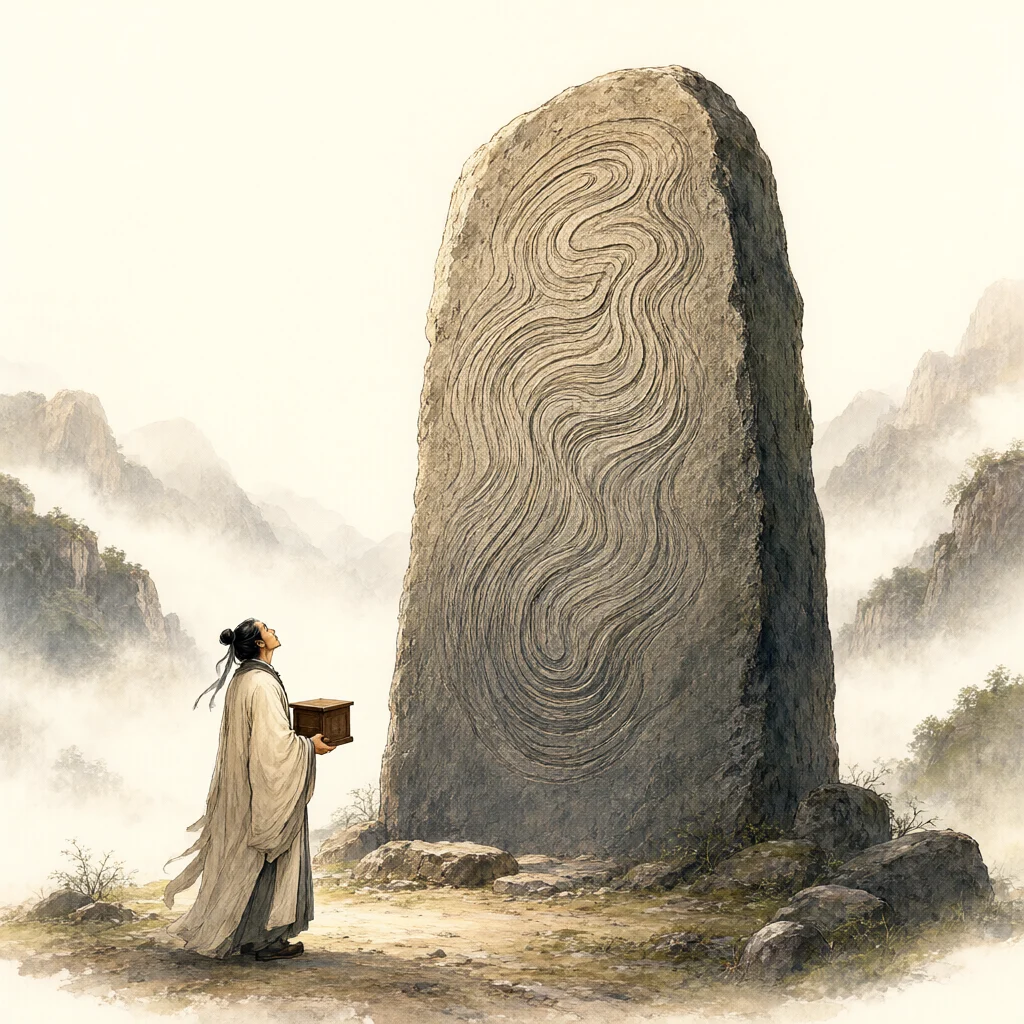
The phrase describes a state where knowledge cannot be obtained, much like a scholar facing a silent, inscrutable monument.

Origin

The phrase 不得而知 is formed by combining four characters. The character 不 means not, un-, in-, il-, im-, or ir-. The character 得 means to get, to obtain, to gain, or to acquire. The character 而 serves as a conjunction to connect two clauses or adjectives. The character 知 means to know, to understand, or to comprehend.

The character 知 is composed of the elements 大 (of great size, big, large, or huge), 口 (mouth, especially the lips and internal mouth cavity), and 子 (child, offspring, or descendant). According to the MOE Dictionary, the phrase indicates being without a way to know.

Confidence: high · written by gemma4:26b, checked statement-by-statement against the sources below.

「不得而知」由四個中文字組成。其中「不」表示否定;「得」意指獲得、得到或取得;「而」作為連接詞,用以連接兩個子句或形容詞;「知」則表示知道、理解或領悟。

在字形結構上,「知」字包含了「大」、「口」與「子」三個組成部分。根據相關資料,「大」代表巨大或大型,「口」指口部(特別是嘴唇與口腔內部),而「子」則指小孩或後代。

Confidence: high · written by gemma4:26b, checked statement-by-statement against the sources below.

Lineage

  • characterChinese不 “not; un-; in-; il-; im-; ir-”
  • characterChinese得 “to get; to obtain; to gain, to acquire”
  • characterChinese而 “and (used to connect two clauses or adjectives)”
  • characterChinese知 “to know; to understand; to comprehend”
    • ideaChinese大 “of great size; big; large; huge”
    • ideaChinese口 “mouth, especially the lips and internal mouth cavity (Classifier: 把 c)”
    • ideaChinese子 “child; offspring; descendant”
Wiktionary etymology text

No etymology text yet. The graph shows what is known from the sources.

Meanings

phrase
  1. to be unable to know or find out; to remain unknown; to be unable to ascertain

國語辭典 definitions

  1. 無從知道。 例:這件事他會怎麼處理,我們就不得而知了。

© Ministry of Education, Taiwan — CC BY-ND 3.0 TW, shown unaltered.

Sources

  • etymagent (local gemma4:26b) — Generated
  • HSK / TOCFL word lists — Facts (levels)
  • 教育部《國語辭典簡編本》 (Taiwan MOE) — CC BY-ND 3.0 TW
  • Written form — n/a
  • Wiktionary (via Wiktextract / kaikki.org) — CC BY-SA 4.0