來龍去脈
- 来龙去脉
Etymology graph
- inherited
- borrowed
- derived
- parts
- meaning component
- sound component
- related
點擊節點放大 · Click a node to zoom in
Origin
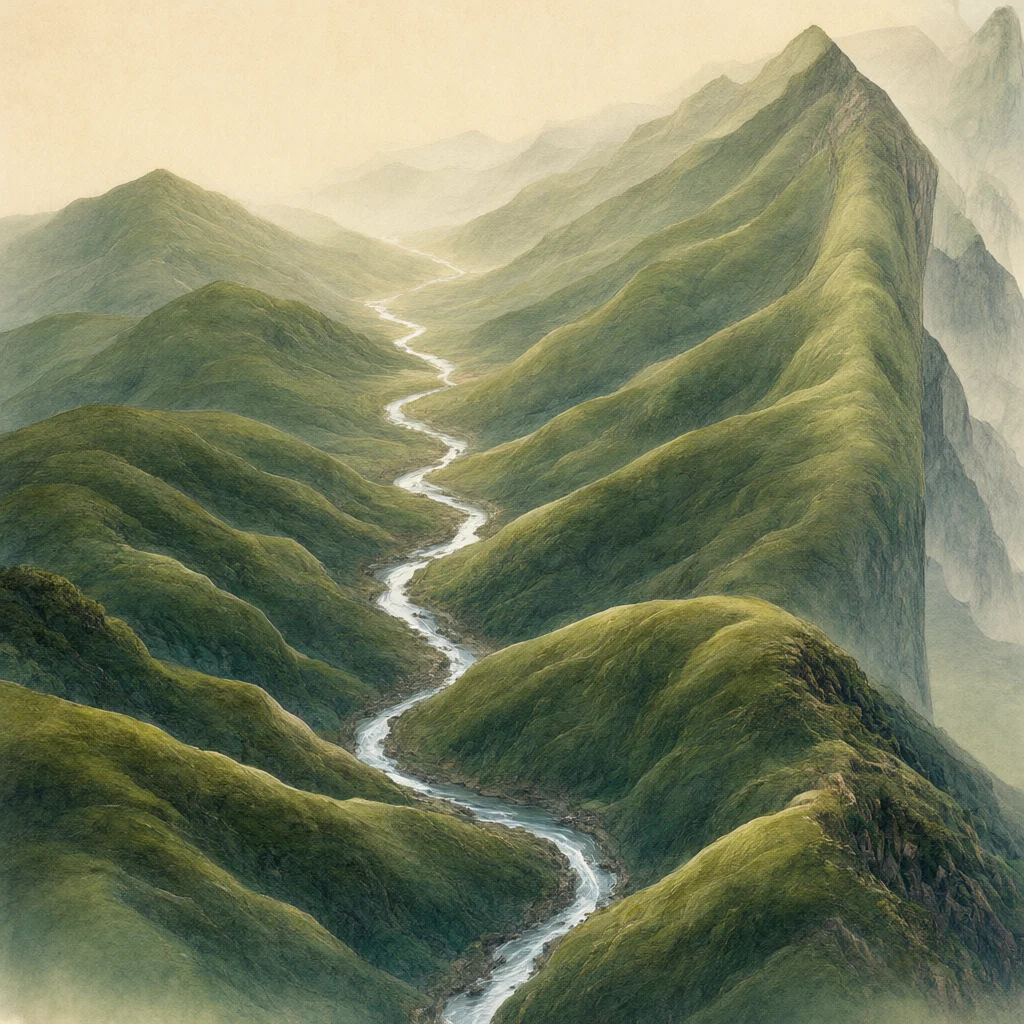
The phrase is composed of the characters 來 (to come; to arrive), 龍 (dragon), 去 (to leave; to depart from), and 脈 (blood vessels; veins and arteries). In fengshui terminology, 龍脈 refers to a stretch of rolling hills. Within this context, the starting point is termed 來龍 and the end point is termed 去脈.
According to the MOE Dictionary, in the study of kan-yu (geomancy), the undulations of a mountain range are called "dragon," with the main peak referred to as the "coming dragon" (來龍). The streams in a valley are called "veins," with the main stream referred to as the "departing vein" (去脈). The phrase is now used metaphorically to refer to the origin and changes of matters.
The character 去 consists of the semantic component 大 (big; large; huge) and the component 口 (mouth), alongside the phonetic component 𠙴. The character 脈 contains the semantic component 肉 (meat; flesh) and the phonetic component 𠂢.
Confidence: high · written by gemma4:26b, checked statement-by-statement against the sources below.
在字形構成上,此詞由「來」、「龍」、「去」與「脈」四個字組成。「去」字包含表示大尺寸的語義部件「大」,以及「口」;其音符為「𠙴」。「脈」字則含有表示肉或肉體的語義部件「肉」,音符為「𠂢」(即「派」的原形)。
根據相關記載,「龍」指中國龍,「來」意為到來或抵達,「去」則指離開或出發。「脈」字本身與血管、靜脈或動脈有關。
Confidence: high · written by gemma4:26b, checked statement-by-statement against the sources below.
Lineage
Wiktionary etymology text
In fengshui terminology, 龍脈/龙脉 (lóngmài) refers to a stretch of rolling hills, the start and end points of which are termed 來龍/来龙 and 去脈/去脉, respectively.
From Wiktionary, CC BY-SA 4.0.
Sources
- etymagent (local gemma4:26b) — Generated
- 教育部《國語辭典簡編本》 (Taiwan MOE) — CC BY-ND 3.0 TW
- Written form — n/a
- Wiktionary (via Wiktextract / kaikki.org) — CC BY-SA 4.0
- Wiktionary: 來龍去脈