源etymfun
About

Etymology data from Wiktionary via Wiktextract (CC BY-SA 4.0). Chinese character data from the 說文解字, the Taiwan MOE 國語辭典簡編本 (CC BY-ND 3.0 TW) and HSK/TOCFL lists.

Explanations are written by a local model (gemma4) and only published after a verification pass against the cited sources. How it works.

Chinese

討價還價

/tʰɑʊ̯²¹⁴⁻²¹ t͡ɕi̯ä⁵¹ xu̯än³⁵ t͡ɕi̯ä⁵¹/
to negotiate back and forth; to bargain; to haggle
  • 讨价还价
Post Share

Etymology graph

  • inherited
  • borrowed
  • derived
  • parts
  • meaning component
  • sound component
  • related
React Flow
Press enter or space to select a node. You can then use the arrow keys to move the node around. Press delete to remove it and escape to cancel.
Press enter or space to select an edge. You can then press delete to remove it or escape to cancel.

點擊節點放大 · Click a node to zoom in

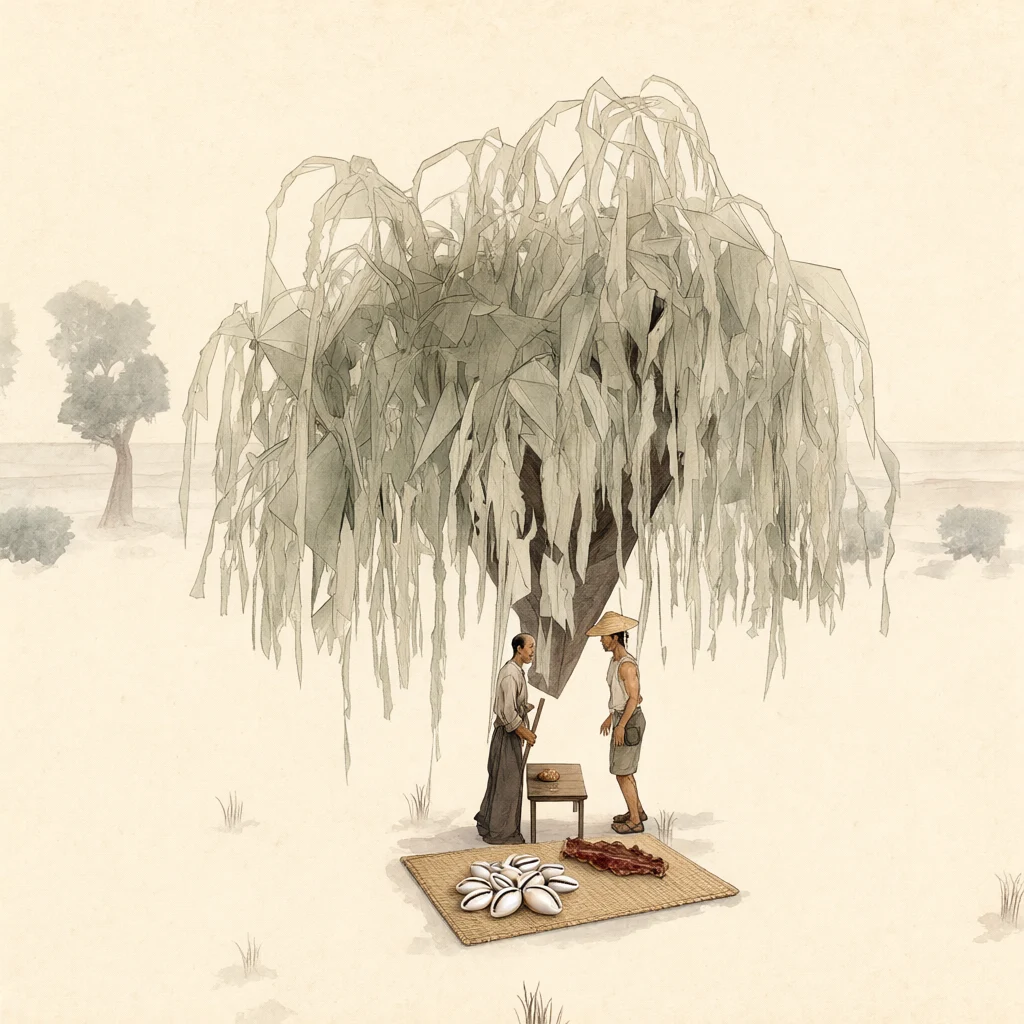
The phrase describes the back-and-forth movement of negotiation, involving speech, value represented by shells, and the rhythmic exchange of terms.

Origin

The phrase is formed from four characters. The character 討, meaning "to send armed forces to suppress," contains the semantic component 言 ("to say; to speak; to talk") and the phonetic component 肘 ("elbow"). The character 肘 itself is composed of the semantic component 肉 ("meat; flesh") and the phonetic component 寸.

The character 價, meaning "price; cost," uses the semantic component 人 ("man; person; people") and the phonetic component 賈 ("a surname"). The character 賈 consists of the semantic component 貝 ("shellfish; cowrie") and the phonetic component 襾 ("cover").

The character 還, meaning "to return to a place; to go back to a place," uses the semantic component 辵 ("to walk for a while and be still for a while") and the phonetic component 睘 ("to look frightenedly"). The component 辵 is composed of 彳 ("to walk slowly") and 止 ("foot"), while 睘 contains the semantic component 目 ("eye") and the phonetic component 袁 ("long").

Confidence: high · written by gemma4:26b, checked statement-by-statement against the sources below.

Lineage

  • characterChinese討 “to send armed forces to suppress”
    • soundChinese肘 “elbow”
      • meaningChinese肉 “meat; flesh”
    • ideaChinese言 “to say; to speak; to talk”
    • ideaChinese寸 “Legally defined as the tsun of 3.71475 cm.”
  • characterChinese價 “price; cost”
    • meaningChinese人 “man; person; people (Classifier: 個/个 m c; 隻/只 h)”
    • soundChinese賈 “a surname”
      • soundChinese襾 “cover”
      • meaningChinese貝 “shellfish; cowrie”
  • characterChinese還 “to return to a place; to go back to a place”
    • meaningChinese辵 “to walk for a while and be still for a while”
      • ideaChinese彳 “to walk slowly”
      • ideaChinese止 “foot”
    • soundChinese睘 “to look frightenedly”
      • meaningChinese目 “eye (Classifier: 雙/双 mn-t)”
      • soundChinese袁 “long”
        • ideaChinese衣 “garment; clothes; clothing (Classifier: 件)”
        • ideaChinese又 “again; once more”
Wiktionary etymology text

No etymology text yet. The graph shows what is known from the sources.

Meanings

phrase
  1. to negotiate back and forth; to bargain; to haggle

國語辭典 definitions

  1. 買賣時,雙方商量符合自己理想的價錢。 例:不二價商店是不能討價還價的。
  2. 談判時,雙方商量各自所提的條件。 例:雙方在航線及班次上討價還價,這場談判進行得很不順利。

© Ministry of Education, Taiwan — CC BY-ND 3.0 TW, shown unaltered.

Sources

  • etymagent (local gemma4:26b) — Generated
  • 教育部《國語辭典簡編本》 (Taiwan MOE) — CC BY-ND 3.0 TW
  • Written form — n/a
  • Wiktionary (via Wiktextract / kaikki.org) — CC BY-SA 4.0